The Steps We Take Toward Tree Removal
Deciding to remove a tree is a big decision that no one should take lightly. Trees that are dying or already dead need to be removed not just for aesthetics but for health and safety as well. However, sometimes live trees need to be removed if they are interfering with buildings, utility wires, driveways or other trees. Give it considerable thought before you decide to remove a tree, as it will take years to replace a removed tree.
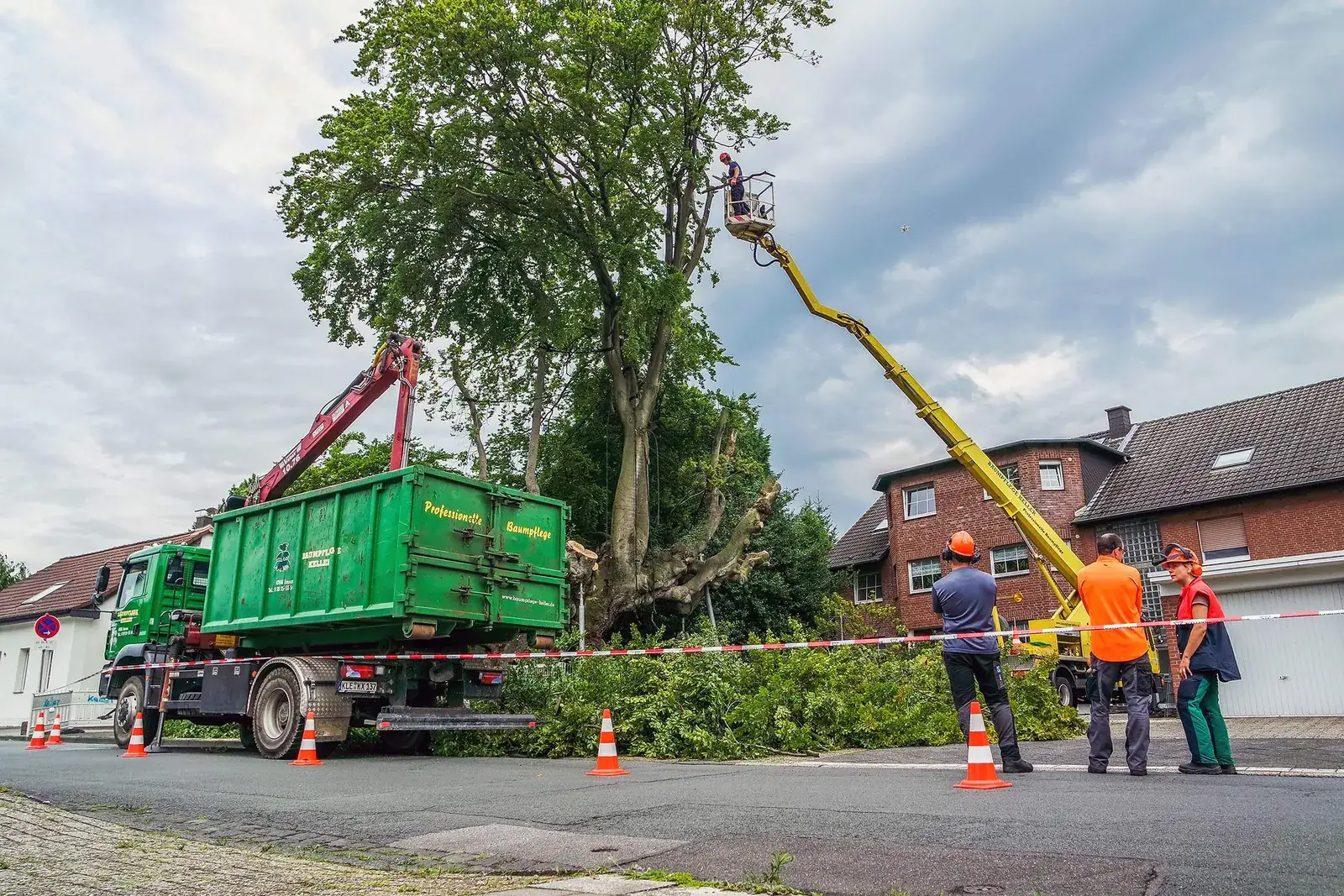
Large trees should always be removed by tree care professionals, because they will require guide ropes and mechanical equipment. If one is not careful, the tree may come down in the wrong direction causing damage or injury. If a tree is being removed, because it interferes with utility lines, you will need to call your local utility company.
Let’s look at the steps to take relating to tree removal.
- First, it is necessary to find out if you require any permits to remove a tree. If you do, then before any work is begun you will need to make sure you have the correct permits.
- Check the surrounding area for any obstacles that could be in the way such as a fence, another tree, utility wires, a house, a car, etc.
- Step back and have a look at what direction the tree naturally leans. The best direction to fall the tree is to the natural angle of growth.
- Check the tree for safety hazards like hanging branches. Have a look at the tree trunk to see if there are any open wounds, because this might indicate the tree is rotten or hollow in the center. It is recommended that the falling of a rotten or hollow tree be done by professionals who can control the direction the tree falls. There is also risk that the tree will come down prematurely, which can put people and property at risk.
- You should always have at least two escape routes in place – at least one on each side of the tree, which leads away from where it is expected the tree will fall.